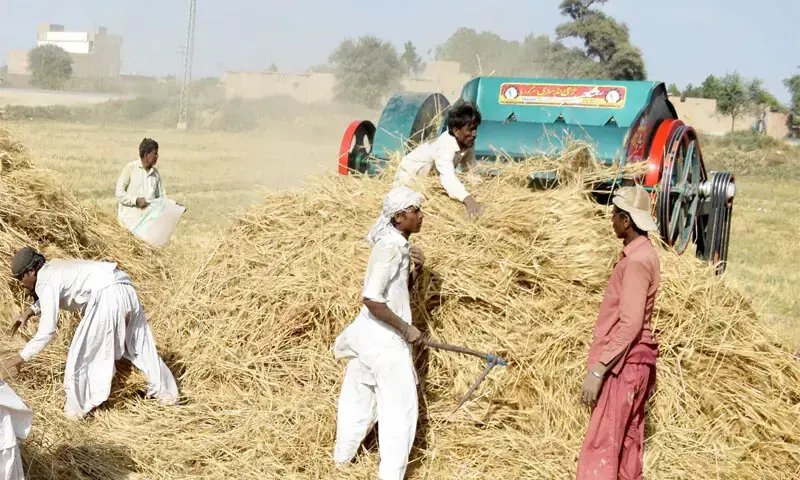
Sindh’s wheat crop has almost been harvested; however. the province’s food department has only been able to procure about 65,000 tonnes of grain until May 12, against the government-approved target of one million tonnes under theWheat Policy 2026.
Given the mid-May procurement figures, it seems nearly impossible that the food department will meet its procurement target. The price of wheat in the open market has already begun to surge. This would lead to a price increase in flour for consumers already hit by an unprecedented hike in fuel prices due to the ongoingUS-Israel-Iran war.
This year. the Sindh government has decided to procure wheat at Rs3,500 per 40kg or Rs8,750 per 100kg for the 2025-26 rabi season. The government took this decision after a one-year gap, in line with International Monetary Fund (IMF) conditions. It had planned to buy wheat from small farmers with land of one to 25 acres.
The government was set to buy wheat only from farmers registered under the Benazir Hari Card (to be used for the first time in Sindh). a departure from conventional procurement practices.
Amid a medley of issues. government support prices face considerable barriers to make any real positive impact on the agriculture sector, especially for smaller farmers.
These registered small farmers have already received cash support from the government for wheat cultivation under the Wheat Growers Support Programme at a cost of Rs84bn aimed at supporting grain production. According to the food department, around 330,000 farmers have been registered by the Sindh agriculture department so far.
The enlisted small growers were supposed to sell wheat to the government,. this proved otherwise, as indicated by the 65,000 tonnes procured till mid-May. The government should have completed its procurement by then. Wheat harvesting in lower Sindh usually begins around late February, followed by cotton cultivation,. then wheat harvesting picks up pace. By the close of May, harvesting even in the upper parts of Sindh nears its end.
For wheat procurement, the Sindh government had attached some strings even for registered farmers. Firstly, the government capped the procurement to 10 bags of 50kg each per farmer. Secondly, the government began its procurement drive on April 1. The government kept its 10-bag condition unchanged for about three weeks until it was withdrawn as the government belatedly realised farmers were not selling wheat to the food department due to price disparity in the market.
They sold wheat in the open market, where the price remained higher than the government’s support price of Rs3,500 per 40 kg. Rs8,750 per 100kg. Only during early harvesting time (late Feb. March), farmers sold grain at a slightly lower price of Rs7,800-7,900 per 100kg in the market.
When the food department began procurement on April 1. the open market’s wheat price had already risen substantially, leading to the distortion. Small farmers understandably preferred a higher rate for their grain.
The latest reports indicate the food department is now considering an upward revision of the support price of Rs3,500 to meet the procurement target. Such an initiative would in no way benefit farmers, but would benefit the private sector that stocks the wheat.
The food department currently has around 200,000 tonnes of fair-quality wheat reserves in its godowns. The department releases wheat around Oct-Nov each year after procuring a fresh wheat crop.
Last year, the Sindh government had to revise the issue price of wheat downward from Rs9,500 to Rs8,000 per 100kg bag for chakki owners. roller flour mills to align it with the open market price of wheat in Dec 2025. At that time, millers. chakki owners were buying wheat from the open market sans deduction and exclusive of transportation charges.
“The decision to procure wheat from small farmers was not bad to begin with. But the government didn’t realise. starting procurement in April would be too late,” shared Sindh Abadgar Board (SAB) president Mahmood Nawaz Shah.
He deplored the government’s inconsistency with its wheat policy. Sindh procured wheat for Rs4,000 per 40kg in 2023-24 and discontinued it in 2024-25 due to IMF restrictions, it said. Now. again, the crop is being procured at Rs3,500, a lower rate than it was bought at in 2023-24, despite a substantial increase in the cost of production.
Primarily, Shah said, wheat had already been bought by the private sector,. the government is unlikely to get grain from farmers. It is wishful thinking that the government will meet the 1m-tonne procurement target by revising the wheat support price upward. “Any such step [increasing support price] will benefit the middlemen alone and not the primary grain producers. SAB won’t support it,” he said.
The situation in Punjab is not much different. where, according to Pakistan Kissan Ittehad leader Khalid Mehmood Khokhar, growers sell in the open market rather than to the government. Punjab was supposed to procure 3m tonnes of wheat through companies notified by the government. Mr Khokhar believes that when wheat harvesting began in Rahim Yar Khan around mid-April. no one approached farmers to buy it. When the selling price increased, the food department tried to procure it, but not with much success.
Sindh contributes around 25pc of the nation’s wheat production, after Punjab. Sindh agriculture department figures showed that 4.8m tonnes of wheat were produced in the province in the 2025-26 season. While production figures were open to revision, it would be roughly the same.
Price-wise. wheat is trading at Rs10,900 to Rs11,000 per 100kg bag in the market, up from Rs7,800 to Rs7,900 when harvesting began in March, an increase of Rs3,200 in two months. Increasing wheat’s cost has taken the rate of per kg flour from Rs100-Rs110 a kilo in March to Rs140/kg in May.
Chakki owners noted with concern that this price trend might force the government to import grain to ensure food security,. that’s why Najmuddin Chohan, general secretary of Atta Chakki Owners Social Welfare Association, has urged Sindh’s chief minister to import wheat to frustrate hoarders, who wanted to make an extra buck after buying inexpensive wheat. An identical letter was addressed to the prime minister to seek permission to import wheat.
Published in Dawn, The Business and Finance Weekly, May 18th, 2026
Discussion
Sign in to join the thread, react, and share images.