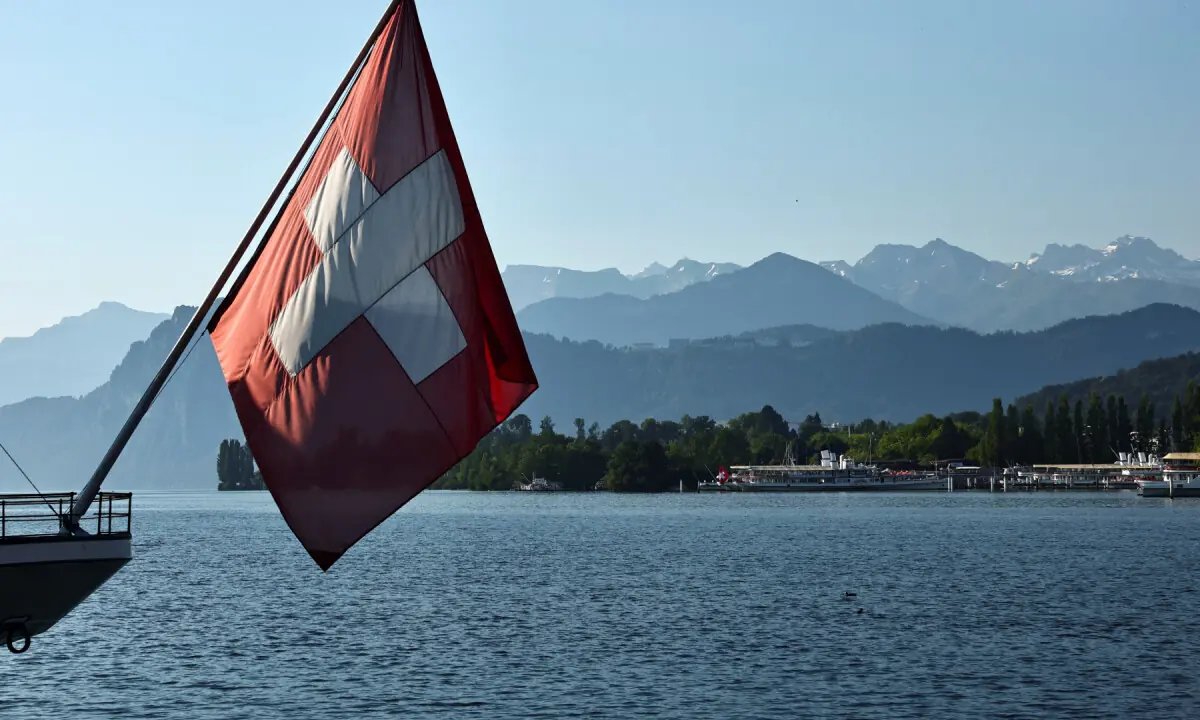
Switzerland said talks between the United States. Iran on a pact to end the Middle East conflict would not take place on Friday, as US Vice President JD Vance dropped plans to travel to Geneva.
The talks were set to take place under the ‘Islamabad Memorandum of Understanding’signedbetween the US. Iran a day ago, after the two sidesagreedon a14-point accordon Monday. Under the deal, Washington. Tehran have agreed on a framework to end the war, reopen theStrait of Hormuzand negotiate on key issues within 60 days.
The talks, set for the mountaintop resort of Burgenstock, would not take place, Switzerland’s foreign ministry confirmed,. gave no details.
“The planned talks between the US, Iran, Qatar. Pakistan have been postponed,” the Swiss foreign ministry said in a message toAFP.
“Switzerland remains ready to facilitate these talks. The relevant preparatory work at Burgenstock is continuing,” it added, without providing a new date for the talks.
In Washington, a White House spokespersonsaid, “The logistics of these negotiations have never been simple or predictable. As of now, the vice president is not departing tonight.”
However, the official added, “We look forward to beginning technical talks as soon as possible.”
There was no immediate response from Iran. which had earlier said it was ready to begin technical talks after Thursday’s14-point accordextendeda tenuous ceasefire by at least 60 days.
Iran’s negotiators first needed to see signs of the US implementing the interim deal,. there was no confirmation its delegation would travel to Geneva, the semi-officialTasnimnews agency said before Vance’s Thursday announcement.
Vance and the US delegation had been ready to depart as soon as plans were finalised.
On Thursday. the US vice president hadhinted atplans being unconfirmed, saying: “We think these technical negotiations are going to start sometime this weekend. That’s still the plan, but that could change.”
US. Iran, along with mediators Pakistan and Qatar and other involved countries, were set to meet at “Buergenstock for initial negotiations about implementing the agreement”,accordingto the Swiss foreign ministry.
An official signing ceremony of the Islamabad MoU had also been in the works previously. with Geneva as the planned venue.
Prime Minister Shehbaz Sharif. who signed the Islamabad MoU as the mediator, had said earlier this week that the ceremonywould be held in Genevaand be hosted by Pakistan.
However. the premier’s plans to travel to Geneva were cancelled on Thursday, with Deputy PM Ishaq Dargiving the reasonthat the signing had been “completed remotely”.
US officials had also said they would hold a formal signing ceremony in Switzerland,. Iran’s foreign ministry had cast doubt on the plan, calling it unnecessary after both countries’ presidents signed the pact.
The war, which began on February 28 withUS. Israeli air attackson Iran, has killed at least 7,000 people, sent energy prices soaring and shaken global markets.
Throughout the conflict, Pakistan has remained actively involved in mediating for peace. It brokered a ceasefire between the US. Iran on April 8 and also hostedhistoric direct talksbetween the two in Islamabad that month.
Israel. left out of the peace talks, has distanced itself from the US-Iran accord andkept up its attackson Lebanon that it insists are targeted at Hezbollah, also raising questions about whether the agreement would hold.
Fresh Israeli strikes on Friday in Lebanon. where more than a million people have been displaced by the fighting, killed at least 15, the state news agencyNNAsaid.
That raised doubt about how far Trump will go to force his wartime ally to halt an offensive he has now pledged to end.
The deal calls for “permanent termination” of the war in Lebanon,. Israel has said it has no intention of withdrawing, instead depicting an expanded occupation zone in a new map.
Trump has become openly critical of Israel’s operations in Lebanon. opening one of the biggest rifts between the two countries in decades.
On Friday. Iran’s chief negotiator Mohammad Bagher Ghalibaf warned that Tehran would give a “decisive” response if the agreement was breached.
In Washington. some of US President Donald Trump’s Republican allies in Congress questioned whether he had conceded too much in order to end the conflict, unpopular with most Americans in the run-up to mid-term elections in November.
Trump had sworn to end the war only with Iran’s “UNCONDITIONAL SURRENDER”.
But the memorandum signed with Iran instead provides relief from economic sanctions, unfreezes assets worth tens of billions of dollars. immediate US waivers for its exports of oil.
Iran’s Supreme Leader Ayatollah Mojtaba Khamenei said Trump had signed the deal “out of desperation”. signalled that approaching talks over Iran’s nuclear ambitions, among Trump’s stated reasons for starting the war, would not be easy.
“If the American side wants to be too demanding, we will not accept it,” he said in a message.
The deal gives negotiators 60 days to agree on the status of Iran’s nuclear programme, unless an extension is agreed,. set up a $300 billion reconstruction fund for Iran and other financial incentives.
Vance said Washington would also seek to limit Iran’s long-range missiles.
The growing cost of the war also drew the spotlight, as the US defence department told lawmakers it needed $80 billion to cover the costs. some unrelated bills, theWall Street Journalsaid.
When the US. Israel launched the war nearly four months ago, Trump said he aimed to destroy Iran’s nuclear capabilities to ensure it could never develop such weapons.
Tehran has repeatedly denied that it aims to develop nuclear weapons. stating that its nuclear programme is only for civilian purposes.
Trump also sought to end Tehran’s ability to strike its neighbours. prevent it from backing anti-Israel groups in the region, and at timescalled for regime changein Iran.
None of those objectives had been met when Trump signed the agreement. in which Iran restated its decades-long assertion not to get or develop nuclear weapons.
It also agreed to the onsite “down blending” of its highly enriched uranium stockpile. inspections by the International Atomic Energy Agency (IAEA) as a Non-Proliferation Treaty (NPT) member, rejecting Trump’s wish to remove the material from the country.
US officials say the negotiations could still yield a strong agreement on Iran’s nuclear programme, aiming to better one dating from2015between Iran, the US. other countries that Trump tore up in his first term.
But critics say Iran is in a stronger position now, having withstood a superpower attack, demonstrated its control of the Strait of Hormuz. gained valuable waivers to financial sanctions.
Iran has said it will still exert control over Hormuz in partnership with Oman, its neighbour across the critical waterway,. intends to charge ships service fees that did not exist before the war, although not during the 60-day talks.
Oil prices dipped on Friday as prospects brightened for more supply after tankers began moving through the reopening Strait, which had carried nearly a fifth of global crude oil. liquefied natural gas supplies before the war.
Additional input from AFP
Discussion
Sign in to join the thread, react, and share images.