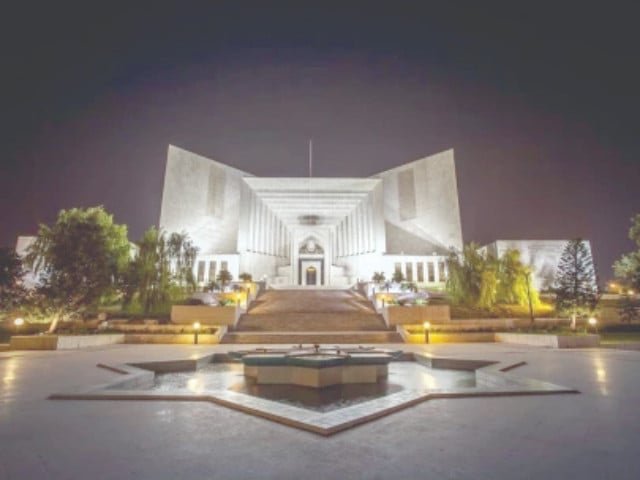
Says constitutional power obligates all judicial authorities, including high courts, to follow SC directions
The Supreme Court (SC) on Tuesday ruled that all executive. judicial authorities, including the high courts across Pakistan, were bound to act upon its directions under Article 187 of the Constitution.
"Under Article 187 of the Constitution. the SC possesses the authority to issue such directions, orders, or decrees as may be necessary for doing complete justice in any case or matter pending before it. This constitutional power obligates all executive. judicial authorities, including the High Courts, throughout Pakistan to act upon the directions of the SC to ensure effective implementation of statutory mandates for the purpose of regulating judicial process", says a 5-page judgement authored by Justice Jamal Khan Mandokhail.
The observations came while hearing a matter in which directions were sought for completion of a complaint filed under the Illegal Dispossession Act. 2005, within the period of 60 days.
A division bench comprising Justice Mandokhail. Justice Malik Shahzad Ahmad Khan said Article 187 empowered the SC to issue such directions, orders, or decrees as might be necessary for doing complete justice in any case or matter pending before it.
The bench noted that the complaint in the case had been filed in 2016. whereas Section 5(2) of the Illegal Dispossession Act, 2005 required proceedings to be concluded within 60 days of the trial court taking cognisance of the complaint.
Read:SC restores full working schedule
However, the trial court did not perform its statutory obligation, the judgment said.
“It is. therefore, the constitutional responsibility of the SC to issue appropriate directions to that court, as well as to all courts across the country exercising jurisdiction under the Act, to ensure that they adhere to the following instructions, in addition to the procedure prescribed by the Act,” the order stated.
The court directed that every trial court seized of a complaint under the Act, upon taking cognisance, should complete proceedings within the 60-day timeframe specified under Section 5(2). maintain a day-to-day order sheet of proceedings accordingly.
It further ordered that where a trial cannot proceed on a scheduled date. the trial court must specifically record sufficient reasons for the delay in the order sheet.
“Bare references to ‘non-availability of witnesses’ or ‘adjournment sought by counsel’ shall not constitute sufficient reasons for the purposes of Section 5(2),” the order said.
The court also ruled that no adjournment should be granted as a routine. that any adjournment must be based on a justifiable reason.
The judgment directed members of the inspection teams of the respective high courts. directors general district judiciary to periodically monitor all cases pending under the Act before trial courts in their jurisdictions, including the date of filing of the complaint, the date of taking cognisance or framing of charge, the status of proceedings and, where the 60 days have been exceeded, the reasons recorded for the delay.
The court further ordered that complaints under the Act must be accompanied by a list of witnesses. that complainants should ensure their presence on every date fixed for recording statements.
Read more:SC judge flags rampant planting of fake drug cases
“The complainant. the accused, represented by a counsel, shall ensure the presence of their counsel before the court on every date of hearing,” the order said.
The bench also held that where any party challenges an interim order before a higher forum. the trial court must continue proceedings unless a restraining order is passed by the higher forum.
The SC directed that copies of the order be transmitted to the registrars of all high courts for information, necessary action. strict compliance.
The same directions were also issued in the instant matter.
Comments are moderated and generally will be posted if they are on-topic and not abusive.
For more information, please see ourComments FAQ
Discussion
Sign in to join the thread, react, and share images.