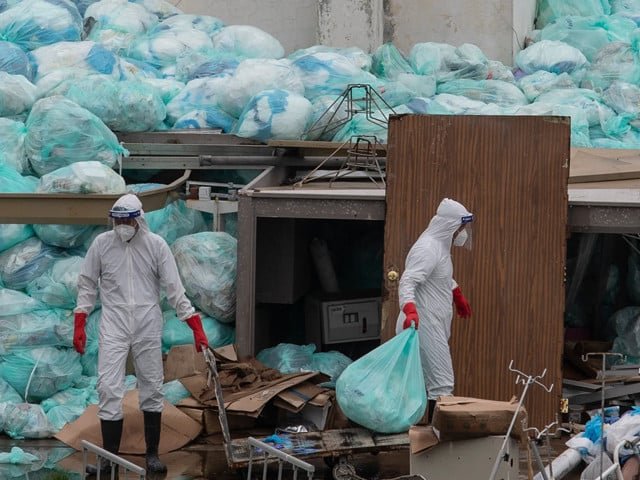
Infectious refuse must be segregated at source and destroyed
Several hospitals are contributing to the spread of infectious diseases by failing to properly manage. dispose of their medical waste, also raising concerns about environmental protection.
The waste generated in operating rooms, emergency wards. laboratories is finding its way outside hospital premises where it is allegedly being picked up, sorted and recycled through unregulated networks.
According to public health experts, the hospital waste includes a wide range of hazardous material such as used syringes, injection needles, blood contaminated dressings, intravenous fluid bottles, surgical gloves, medicine vials, expired drugs. plastic tubing.
Under health. environmental regulations, this waste is classified as infectious and must be segregated at source and destroyed through incineration or sterilisation.
According to sources in health authorities, major hospitals in Lahore. at other big cities, including Faisalabad, Rawalpindi, Chakwal, Gujrat, Bahawalpur, Narowal, Gujranwala and Sialkot, have failed to ensure arrangements for safe disposal of their waste weighing in tonnes and enforcement of the regulations remains inconsistent. In several cases, medical waste is not properly segregated and is mixed with common garbage.
This mixed waste is then transported outside hospital boundaries and dumped in municipal bins or open sites.
Once discarded in this manner. it becomes accessible to informal waste pickers who manually search through the garbage for recyclable material, particularly plastics that can be sold.
From this point, a shadow recycling system begins to operate. Recovered items such as syringes, saline bottles, drip sets. plastic medical packaging are reportedly sold to scrap dealers and small recycling units.
These materials are then washed, melted and reshaped into low cost plastic goods that enter local markets. These products include household containers, cups, buckets and inexpensive plastic toys.
Medical and environmental experts warn that this practice creates a dangerous cycle.
"Hospital plastics are not ordinary waste as they may carry biological contamination such as blood residues and drug traces. Even when melted, there is concern that toxic chemical remnants from medical use. plastic additives may persist, creating long-term health risks for both workers and consumers," said Punjab University Professor Munawar Sabir.
A particularly alarming aspect of the issue involves syringes and other sharp objects. Used injection is considered one of the most hazardous forms of medical waste due to its potential to transmit blood-borne infections.
Health authorities classify these items for immediate destruction, yet reports suggest that in some informal systems, plastic syringe bodies are separated from needles. diverted into recycling streams.
Public health specialists highlight the potential transmission of hepatitis B. C, as well as other infectious diseases if contaminated material is improperly handled.
Waste workers in informal sectors face the highest exposure, often without gloves, masks or other protective equipment. These risks can extend beyond workers if contaminated materials are converted into consumer products.
There are also concerns that recycled hospital plastics may enter manufacturing units producing everyday items. These include toys, utensils, containers and other household goods sold in local markets. Because these items are produced in unregulated environments. there is often no traceability of the material source, leaving consumers unaware of risks.
Environmental impacts are equally serious. "When medical waste is burned in open conditions or poorly controlled facilities, it can release toxic gases. pollutants into the air. Improper dumping also contributes to soil. water contamination, while plastic waste that is not fully processed can persist in the environment for decades, breaking down into microplastics," said an expert.
The hospital waste management rules in Punjab require segregation, secure transport and disposal through specialised systems.
However experts say enforcement remains uneven, particularly in smaller hospitals and private clinics where monitoring is weaker and resources limited.
Comments are moderated and generally will be posted if they are on-topic and not abusive.
For more information, please see ourComments FAQ
Discussion
Sign in to join the thread, react, and share images.