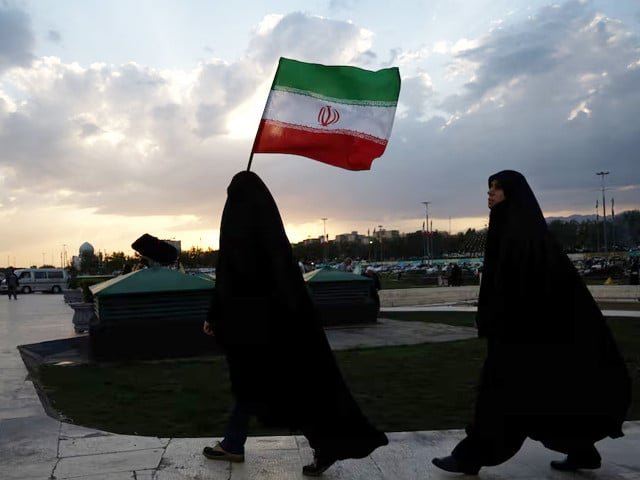
Israeli army signals longer stay in Lebanon despite US-Iran agreement
A $300 billion private fund designed to trigger investment into Iran is outlined in the US-Iran framework agreement,. more than half that sum has already been committed, a source with direct knowledge of the deal toldReuters.
The fund is designed to give both sides an economic incentive to conclude a final deal to end the war, said the source, who spoke on condition of anonymity because the plan has not yet been announced as Washington. Tehran prepare to sign on Friday.
The fund's existence has been previously reported, butReutersis revealing for the first time that more than half of the amount has already been committed. that it will be comprised entirely of private-sector funds.
US. Iranian officials said on Sunday they had agreed on a framework to end their war, which began when US and Israeli forces attacked Iran on February 28, halt the US blockade of Iran and reopen the Strait of Hormuz, a key supply route for global oil and gas.
The new fund is a private investment vehicle, not a reconstruction or reparations programme. will not include any government money or grants, the source said, adding that companies based in the US, the Gulf Arab states, Asia, South America and Africa have agreed to commit financing.
Investments pledged span energy, logistics, manufacturing and transport, the source said.
A senior Iranian source toldReutersthat Tehran had originally sought $400 billion as compensation for war damages from the US. Washington had said it would not provide it.
The idea for the fund, which is to be named the Reconstruction and Development Fund, then emerged.
The mechanism envisages regional countries contributing in various ways, the Iranian source said. These include securing loans. establishing credit lines or directly financing the reconstruction of sites damaged in the war, including facilities such as the Mobarakeh Steel complex, refineries, airports and, more broadly, infrastructure affected by the conflict.
Iran, one of the Middle East's largest economies, has attracted almost no significant foreign direct investment in the past four decades, frozen out of global capital markets by successive waves of US. international sanctions.
The country has the world's second-largest proven natural gas reserves and the fourth-largest proven oil reserves.
It also has a young, educated population of more than 92 million people, a diversified industrial base. significant untapped potential in sectors ranging from petrochemicals and mining to tourism and agriculture.
The investment fund is entirely separate from a parallel negotiating track over the lifting of US sanctions. the release of Iranian sovereign assets frozen abroad, the source with knowledge of the deal said, describing the two as distinct financial mechanisms with different purposes and timelines.
Read:Switzerland confirms US-Iran MoU signing set for Friday at Burgenstock
The fund will not be created or become operational until a final and satisfactory deal is concluded. The memorandum of understanding, once signed, is intended to structure the process over the next 60 days.
"It'll only be created once the final deal is signed," the source said. "During these 60 days, the fund administrators will work with Iranians and investors to plan and scope projects."
Iran's foreign ministry. Pakistan's foreign ministry, which helped mediate the investment fund deal, did not immediately respond to requests for comment.
A White House spokeswoman pointed to aCBSinterview with Vice President JD Vance on Monday in which he said that Iran could gain access to a $300 billion reconstruction fund backed by Gulf states if it complies with an agreement with Washington, including dismantling its nuclear program, eliminating its stockpile of enriched material,. accepting a stringent inspection and enforcement regime.
The source would not say how the fund will be administered or by whom. noting that key details were still to be worked out.
The source named companies from South Korea, Japan, Singapore, Malaysia. the United States among those that had made commitments, but declined to provide a comprehensive list.
The 60-day memorandum is a framework, not a final agreement,. US and Iranian negotiators are expected to work across multiple tracks during that period covering nuclear, sanctions and regional security issues.
G7 leaders welcome announcement of US-Iran deal
Leaders at the G7 Summit taking place in France welcomed on Wednesday the announcement of a deal between the US. Iran.
They reaffirmed that the right of transit passage without restrictions or tolls was the bedrock of international trade,. that they were "ready to contribute to a US-Iran deal implementation."
They also committed to reduce dependence on the Strait and increase individual energy stocks.
Israeli army signals longer stay in Lebanon despite US-Iran agreement
The Israeli army is preparing for a prolonged presence in Lebanon despite a US-Iran agreement that ended the war across multiple fronts. Israeli media reported on Tuesday.
The army is “ready to remain in Lebanon for a long period” if instructed to do so by Israel’s political leadership. Israel’s public broadcasterKANreported, citing unnamed security sources.
The sources added that the army is prepared for “all scenarios in Lebanon,” even as Washington. Tehran move toward signing the agreement on Friday in Switzerland.
According to the report, Israeli attacks in southern Lebanon remain ongoing alongside gunfire toward northern Israel.
The report came hours after Lebanese President Joseph Aoun said the memorandum of understanding between the US. Iran included commitments to halt military escalation across the region, including Lebanon.
Earlier Tuesday, Iranian Foreign Minister Abbas Araghchi said ending the war in Lebanon is “an integral part” of the agreement with Washington. will also include an Israeli withdrawal from Lebanese territory.
Canada's premier calls US-Iran deal 'game changer'
Canada's Prime Minister Mark Carney on Tuesday said he saw the deal between the US. Iran and called it a "game changer."
"I have to say it has exceeded my expectations. We're very pleased with the deal that's been struck," Carney told CNN on the sidelines of the G7 summit in France.
A memorandum of understanding (MOU) was signed between the US. Iran electronically on Sunday, which includes an end to the military operations on all fronts and reopening the Strait of Hormuz while setting the stage for talks on Iran's nuclear program linked to sanctions relief. The signing ceremony is scheduled for June 19 in Switzerland.
The deal, which has not yet been released publicly, outlines an initial ceasefire. calls for the immediate lifting of the naval blockade in the Strait of Hormuz.
"Well, I've seen the agreement. We have our sources, just like you," Carney said, when asked whether President Donald Trump showed the deal to him.
"It is a reasonable length for an agreement, which is in effect. It is a cessation of hostilities. It's a ceasefire for that 60-day period.. So, I think it's well-structured from our perspective.. Again, it's well-structured. I actually think, yeah, I think it's a game changer," Carney said.
Citing the deal, Carney said Iran will not develop or procure a nuclear weapon. "That's at the heart of the deal," he said.
When asked whether Canada plans to help with opening the Strait of Hormuz. Carney said his country will help "as we can."
"We were not a big regional naval power. We have some assets that we can help with this. We can do some stuff on monitoring, but importantly, we can do things on the financial side.. because remember, there are assets that are being unfrozen," he added.
Iran ceasefire agreement to be public soon, permanent truce still awaits negotiation
Details began to emerge on Tuesday of the US. Iran's interim agreement to end the war in the Middle East, with US President Donald Trump saying it will rule out a nuclear weapon for Tehran and a US official saying it allows Iran to sell oil upon signing.
The memorandum of understanding signed this week. though yet to be made public, extends a tenuous ceasefire announced in April by another 60 days to allow the warring countries to negotiate a permanent truce.
Under the deal, the US will end its blockade of Iran's ports while Tehran will restore the passage of oil tankers. other maritime traffic through the Strait of Hormuz, which it has effectively blocked since the US and Israel launched strikes on February 28.
The US president said the agreement states clearly that Tehran will not have a nuclear weapon. the full text would be made public in a formal setting in a few days.
Iran has long said that it will not develop a nuclear weapon. that its nuclear program is for peaceful purposes only.
Trump has given shifting rationales for attacking Iran, but appears to have achieved little of what he has said he wanted: Iran's theocratic government remains in place, its ballistic missile program has not been dismantled,. it has not ended its support for anti-Israel militias like Hezbollah.
The accord exposes Trump, a Republican, to criticism from within his own party ahead of midterm elections in November. Meanwhile, Iran's leaders could face renewed protests if they fail to ease economic pressures after a destructive war.
Read more:US lifts Iran blockade ahead of MoU signing
Israel has not directly participated in the negotiations. has distanced itself from both the April ceasefire and the latest US-Iran agreement, adding uncertainty to whether the new ceasefire will hold.
The war has affected most countries in the region, killing more than 7,000 people, mostly in Iran. Lebanon, which Israel invaded in March after Iran-allied Hezbollah joined the fighting.
US Vice President JD Vance said that the agreement included Israel. Lebanon, contradicting Israeli Prime Minister Benjamin Netanyahu, who said on Monday that Israel is not bound by it, and will not withdraw from southern Lebanon. A Hezbollah spokesperson told Reuters the group believed Iran would not agree to a permanent truce if the Israeli occupation was not ended.
Iran's military command. Khatam al-Anbiya Central Headquarters, warned that Israel should expect a hard response if it did not stop its attacks on southern Lebanon.
A senior US official said the agreement allows Iran to immediately begin selling oil. fuel, and includes banking, transportation and insurance services to facilitate the sales.
US. Iranian officials say the deal could eventually deliver substantial economic benefits to Iran by lifting sanctions and unfreezing foreign assets. It could also set up a $300 billion reconstruction fund, paid for by neighbouring Gulf states that host US military bases. were hit by Iranian attacks during the war, if Iran complies with other terms.
Difficult talks pending
In the coming 60 days. negotiators will return to difficult issues like the future of Iran's nuclear program, which Tehran was discussing with Trump officials in February until those negotiations were interrupted by the US decision to launch the war.
Two other issues that Trump. Netanyahu used to justify the war appear not to be on the agenda: ending Iran's support for regional armed militia groups and curbing its missile program.
Trump has publicly criticised Netanyahu. expressed "frustration" at Israel's military campaign, saying on Tuesday he was "not happy" with the way Israel had handled itself.
"Iran wants to get it done," Trump told reporters about the next phase of negotiations with Iran. a sentiment he has repeated since the war's earliest days. "They have to get back to business,. the relationship is now normalised, so I think it's going to go pretty quickly." Earlier, he described the deal as "a wall to a nuclear weapon" for Iran.
Iran signed an agreement to sharply curtail its uranium enrichment efforts in 2015 with the US and other countries. Still, the agreement fell apart after Trump unilaterally withdrew the US in his first term. That led to Iran creating a stockpile of highly enriched uranium that Trump says he wants removed or destroyed.
Speaking at the G7 meetings in France. Trump said he liked the idea of sending the Iran agreement to lawmakers in the US Congress for review after some of his fellow Republicans complained they were being left in the dark. Trump has faced criticism from some lawmakers for not getting authorisation from Congress for the war. which is broadly unpopular among Americans.
Oil prices slid more than 2% to new three-month lows on Tuesday, a day after tumbling nearly 5% following news of the deal, though industry officials say Middle East oil. gas output will take months to recover fully.
Caution over shipping
Both sides say the Strait of Hormuz, which normally carries about one-fifth of the world's trade in oil. liquefied natural gas, will be open from Friday, but shipping companies say they will wait to see if peace holds.
On Tuesday. Iranian state television reported operations to lift its maritime blockade, while stressing that vessels must still coordinate with Iran's Revolutionary Guards.
Comments are moderated and generally will be posted if they are on-topic and not abusive.
For more information, please see ourComments FAQ
Discussion
Sign in to join the thread, react, and share images.