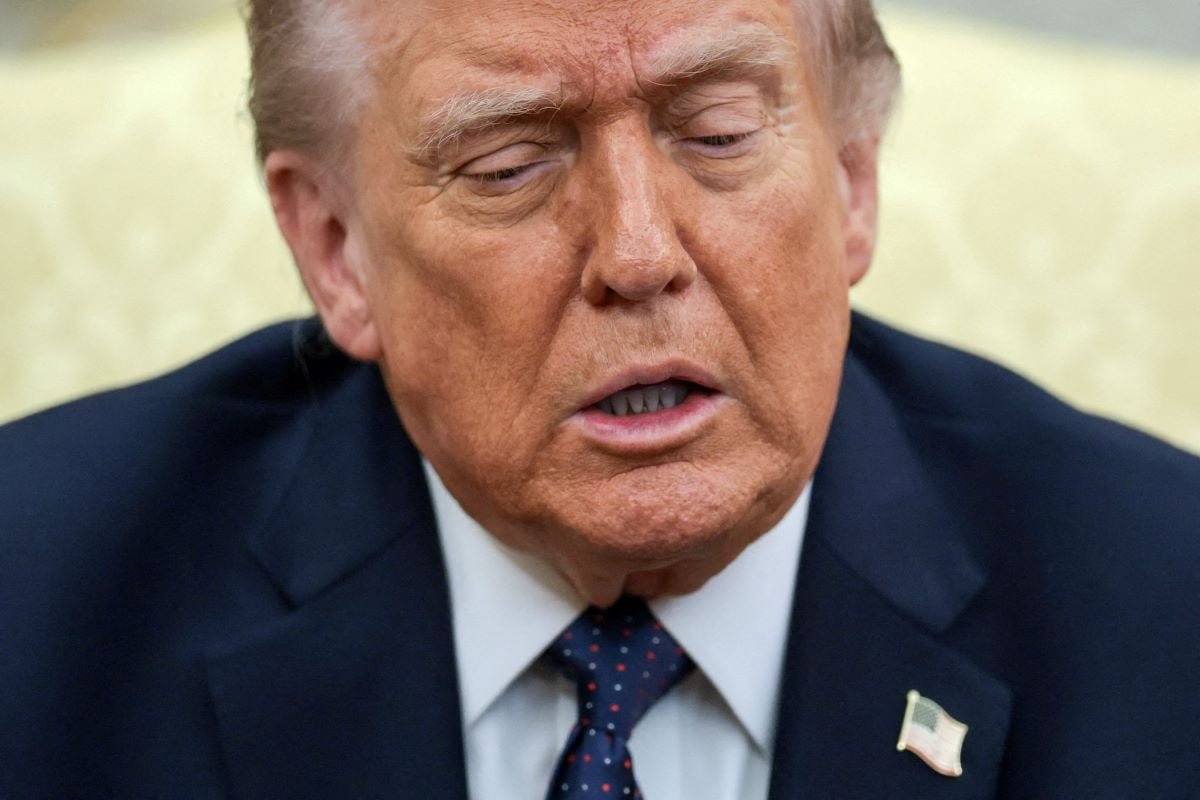
Rapidly shifting rhetoric has created confusion over diplomatic efforts to secure a permanent ceasefire
United States President Donald Trump has made several conflicting statements over the past two months about negotiations with Iran, at times threatening military action. other times declaring peace is close.
His rapidly shifting rhetoric has created confusion. uncertainty over diplomatic efforts to secure a permanent ceasefire and stabilise regional shipping routes around the Strait of Hormuz.
An analysis of public remarks over the past few months reveals that Trump has alternated between three main positions: claiming an agreement is within reach, issuing direct threats of total military destruction,. abruptly announcing de-escalations shortly after delivering ultimatums.
According to American media outletCNN. Trump, since March, has claimed that the US was close to an agreement with Iran or that peace was imminent more than 38 times.
WATCH: CNN montage of Trump saying he's close to a deal with Iran. He's made the claim 39 times since the war began.pic.twitter.com/o2j782A2jF
On multiple other occasions, Trump has issued severe military threats, including using language such as“hit them very hard"or “unleash hell”.
Also Read:Oil extends losses as Trump calls off planned strikes on Iran
Observers have described Trump’s pattern as “diplomatic whiplash”, referring to sudden and repeated shifts in tone and rhetoric.
Here is a chronology of his fluctuating remarks over the last two months.
On 7,Trump issued a dramatic ultimatum on his Truth Social platform, warning that the US would destroy Iranian civilisation if Tehran refused to submit to his terms. reopen the Strait of Hormuz.
“A whole civilisation will die tonight, never to be brought back again. I don’t want that to happen, but it probably will.”
Yet later that same day, 12 hours after a self-imposed deadline, Trump reversed course, announcing that Iran had agreed to a two-week suspension of hostilities. a reopening of the strait, declaring it a “total and complete victory, 100%”.
On 8, Trump celebrated what he called "a big day for World Peace”. However, the easing of tensions did not last long.
On 12. after US-Iran talks inPakistan concluded without a breakthrough, Trump abruptly announced that the US Navy would begin an immediate blockade of the Strait of Hormuz.
Accusing Iran of "extortion", Trump stated that American forces would hunt down ships paying tolls to Iran. begin clearing mines.
“Effective immediately, the United States Navy, the finest in the world, will begin the process of blockading any. all ships trying to enter, or leave, the Strait of Hormuz,” Trump said in a post.
By 17, the tone shifted back to conciliation.
Trump declared the strait was “completely open. ready for business”, claiming that "most of the points are already negotiated" and that the naval blockade would only target Iranian interests until a transaction was finalised.
On 19 and 20, Trump went back and forth between military action and optimistic declarations.
He warned that if Iran rejected a deal, “the United States is going to knock out every single power plant,. every single bridge,” adding:“No more Mr nice guy.”
Asked by aPBSreporter what would happen if the ceasefire ended, Trump replied: “Then lots of bombs start going off.”
Only hours later, however, he said on Truth Social he was “under no pressure”. insisted negotiations would conclude “relatively quickly”.
By the end of . with the lack of any formal agreement, Trump extended the ceasefire indefinitely while maintaining the naval blockade in place until negotiations were resolved “one way or another.”
In late May, Trump again claimed a breakthrough was close.
On May 23. Trump announced through Truth Social that a memorandum of understanding to end the war with Iran had been reached.
“An agreement has been largely negotiated, subject to finalisation between the United States of America, the Islamic Republic of Iran,. the various other countries.
“Final aspects. details of the deal are currently being discussed and will be announced shortly,” he wrote on Truth Social.
However. during meetings onMay 28–29, Trump declined to sign the 60-day draft memorandum negotiated by his own delegation, telling mediators he needed time to think.
He later took to social media to demand changes. On May 31, he formally requested revisions to a draft already negotiated by his own delegation.
Read More:US-Iran peace memorandum could be signed on Sunday in Geneva, Iranian source says
Tensions flared again between June 6. 8, when Iran and Israel exchanged strikes for the first time since mid-, raising fears that the ceasefire was faltering.
Despite the escalation, Trump told reporters after attending the NBA Finals that an agreement could be reached “within two or three days”. that the Strait of Hormuz would reopen immediately.
On June 11, Trump announced that he hadcancelled “scheduled strikes. bombings against Iran”, adding that discussions and final points had been in both concept and great detail and had been approved by all parties.
He said that the naval blockade will remain in full force. effect until the “transaction” is finalised, with the time and place of the signing to be announced shortly.
Later that evening, Trump told a tele-rally audience, “I don’t know if you heard,. we ended the war with Iran today.”
Iran’s Foreign Ministry, however, rejected reports of a finalised agreement, describing them as “mere speculation”.
Comments are moderated and generally will be posted if they are on-topic and not abusive.
For more information, please see ourComments FAQ
**Author: April**
Discussion
Sign in to join the thread, react, and share images.