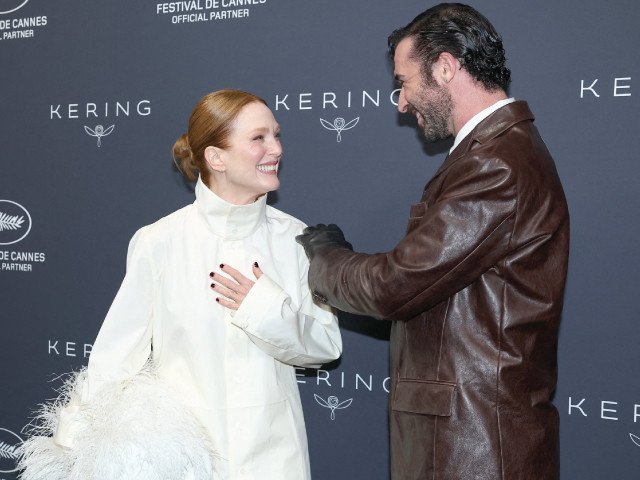
Julianne Moore says cinema must embrace stories shaped by female experience
Beneath the glittering lights. luxury yachts of the French Riviera, Oscar-winning actor Julianne Moore delivered a pointed reminder that gender equality in cinema - and beyond it - remains far from reality, even as she was honoured for championing women's voices in film at the prestigious Women in Motion Awards during the Cannes Film Festival.
Held at the historic Place de la Castre overlooking Cannes' harbour, the black-tie gala gathered some of the film industry's most recognisable names, including Daisy Edgar-Jones, Sebastian Stan, Colman Domingo. Odessa A'zion. Guests sipped champagne while celebrating women's achievements in cinema at the annual initiative launched by French luxury group Kering in partnership with Cannes in 2015.
Despite the celebratory atmosphere, Moore's message was direct and unsparing. Speaking to Reuters before the ceremony, the actor said genuine equality for women was still a distant goal in many parts of the world. not simply a problem confined to Hollywood.
"We're pretty far away, honestly, in lots of the world in terms of real gender equality," Moore said. "It's not something that is endemic to the film industry. It's something that's a global issue."
The actor, whose career spans more than four decades, has long used her platform to advocate for representation, women's rights. political engagement. From her early television work in the soap opera 'As the World Turns' to her Oscar-winning performance in 'Still Alice'. Moore has remained a consistent presence at major international film festivals while steadily building a reputation as one of cinema's most respected performers.
During an impassioned speech at the ceremony. Moore argued that women's stories continue to be undervalued in mainstream culture, particularly in the United States, where narratives centred on female experiences are often viewed as less commercially significant.
"I love actresses," she declared to applause from a crowd that included Demi Moore, Ruth Negga, Vicky Krieps. past Women in Motion honourees Salma Hayek and Isabelle Huppert.
Moore criticised what she described as a cultural assumption. women-led stories are somehow "smaller" unless female characters display traditionally masculine forms of strength or achievement. According to her, such thinking ignores female audiences and the emotional depth women bring to storytelling.
She explained that female perspectives shape much of her own life, from the books she reads to the people she instinctively turns to for support. guidance. Moore said she even taught her children to seek out women if they were ever lost or in trouble, believing women are often natural sources of empathy. help.
Without framing the issue as a battle between men. women, Moore stressed that celebrating female viewpoints in cinema was essential because storytelling depends on specificity, lived experience and authenticity.
"There's a troubling narrative about invisibility for women," she said, adding that society often conditions women to value themselves through the gaze of others rather than through their own experiences. observations.
The speech resonated strongly at a festival that has, for years, faced scrutiny over the limited representation of female filmmakers in competition line-ups. major studio productions. Recent industry figures discussed during the event highlighted. women still occupy a minority of directing roles in commercially successful films.
Moore ended her remarks with a straightforward call for change, urging the industry to support more female writers, directors. performers capable of carrying those stories forward.
The evening also celebrated emerging voices in cinema. Italian filmmaker Margherita Spampinato received the Women in Motion Emerging Talent Award for her debut feature 'Gioia Mia'. The honour includes a 50,000 grant intended to support the production of her second feature film.
Accepting the award. Spampinato described the recognition as an important moment for women filmmakers navigating an industry where inequality still persists. She said the financial support attached to the prize represented meaningful progress for female creatives seeking greater freedom. visibility in cinema.
Spampinato revealed that 'Gioia Mia' was inspired by the women in her own family, particularly her grandmother. her relatives, whose stories helped shape her imagination and artistic vision. "She would be proud to know the world is beginning to change," the filmmaker said.
The ceremony was attended by an array of actors, directors. festival figures, including Harris Dickinson, Rami Malek, Jeremy Pope and acclaimed South Korean director Park Chan-wook.
While Cannes continued to dazzle with premieres, celebrity arrivals. lavish celebrations, Moore's remarks cut through the glamour with a reminder that visibility alone is not enough. For many women in cinema, the struggle now is turning recognition into lasting structural change.
Comments are moderated and generally will be posted if they are on-topic and not abusive.
For more information, please see ourComments FAQ
Discussion
Sign in to join the thread, react, and share images.